Inspiration is the basis for all of our designs but that is only the start. In order to bring our designs into reality, it is necessary to have an extensive knowledge of just HOW garments are constructed (i.e. “put together”) and an essential part of this are patterns since they provide the “roadmap” for the actual construction process. In this post, we’ll be discussing the nature of our approach towards patterning. Enjoy! 🙂

All garments, whether the are haute couture or bargain basement, start with a pattern and it’s that specific pattern that defines what that particular garment is ultimately going to be. Here at Lily Absinthe, our approach to patterning is a combination of methods that are referred to in the trade as “bespoke” and “made to measure (MTM).” These two terms are often used interchangeably in reality are two different methods. With the bespoke method, an individual pattern is created for a specific client based on their measurements and taking into account the various body characteristics of the client. With MTM, the garment is built on pre-existing pattern blocks that are modified on the basis of the client’s measurements (this is admittedly a bit of an over-simplification but it does convey the essence).
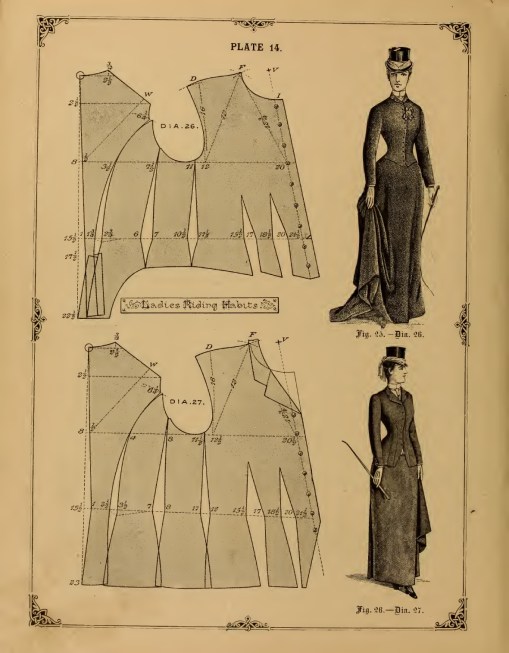
We maintain an extensive library of pattern blocks that we have drafted ourselves and in most instances, we will modify specific pattern blocks based on the individual client’s measurements. More importantly, these modifications also incorporate every nuance of the client’s body. In most instances, the MTM method works perfectly but in some instances, we will draft custom pattern pieces. However, no matter which of these two approaches we use, we guarantee a perfect fit every time and a garment that has been custom made to the client.


Patterning is often presented as a magic and mysterious process that requires the utilization of various arcane procedures to achieve results. And, in more recent years patterning has been presented as something that can be done quickly on a computer and paper patterns instantly printed out. In reality, while pattern drafting is a relatively simple and straight-forward in theory, it does require an attention to detail, precision, and a lot of patience (and we mean A LOT). For more complicated designs, it often requires a series trials rotating back and forth with muslin mock-ups (aka tolle) and revising the paper pattern to achieve the optimal result.


Ultimately, whether a garment is “bespoke” or MTM, it’s critical that the fit be perfect, fabric/trim choices are suitable, and most importantly, that the garment is aesthetically pleasing. 🙂


