Lily Absinthe Takes A Look At India During The British Raj

With the recent series Indian Summers on Masterpiece, our thoughts have turned towards the subcontinent of India and in particular that period of British rule commonly referred to as the British Raj or just Raj. In particular, we have been exploring the relationship between India and fashion during the  late 19th and early 20th Centuries. Composed of the present-day nations of India, Pakistan, and Bangladesh (and some other areas such as Oman and Sri Lanka at various times), British India was enormous in comparison with the United Kingdom itself: India had a land mass of approximately 1,893,179 square miles and a population of approximately 225 million (according to the first census taken in 1881). In comparison, the United Kingdom had a land mass of 120,832 square miles and a population of approximately 35 million (including Ireland).
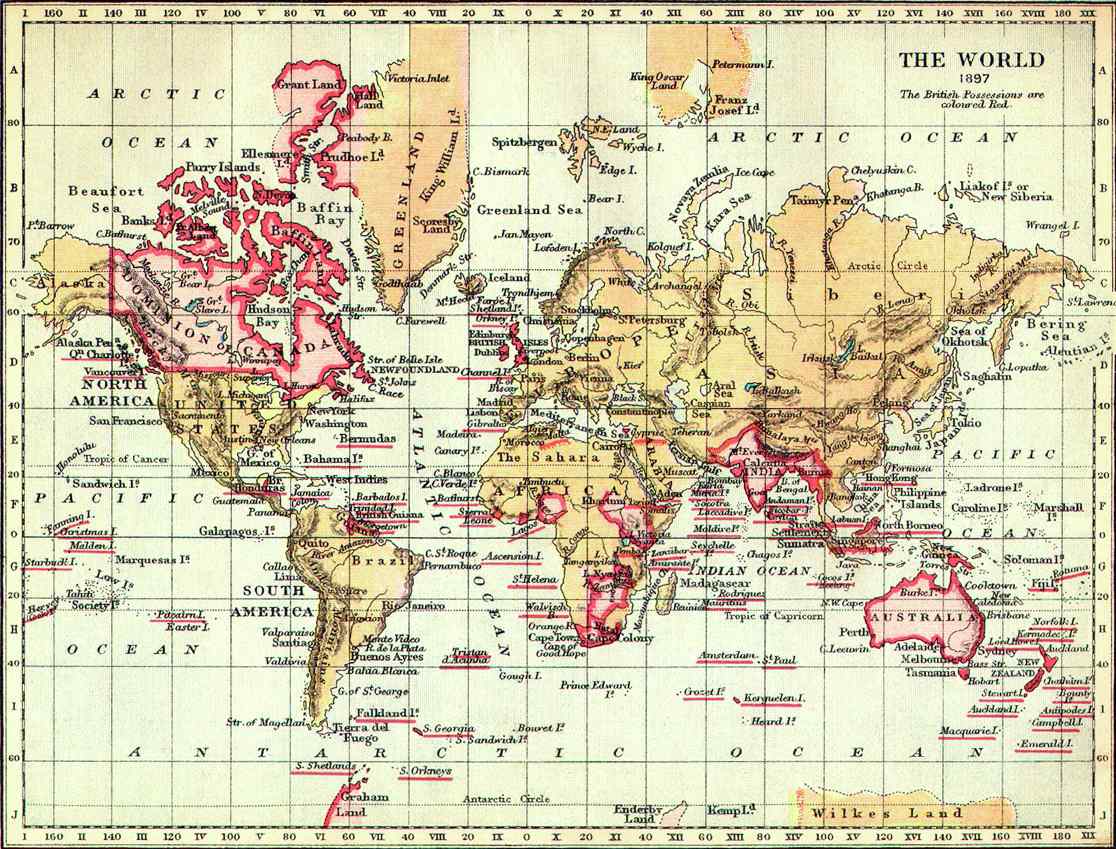
Map of the British Empire, 1897.
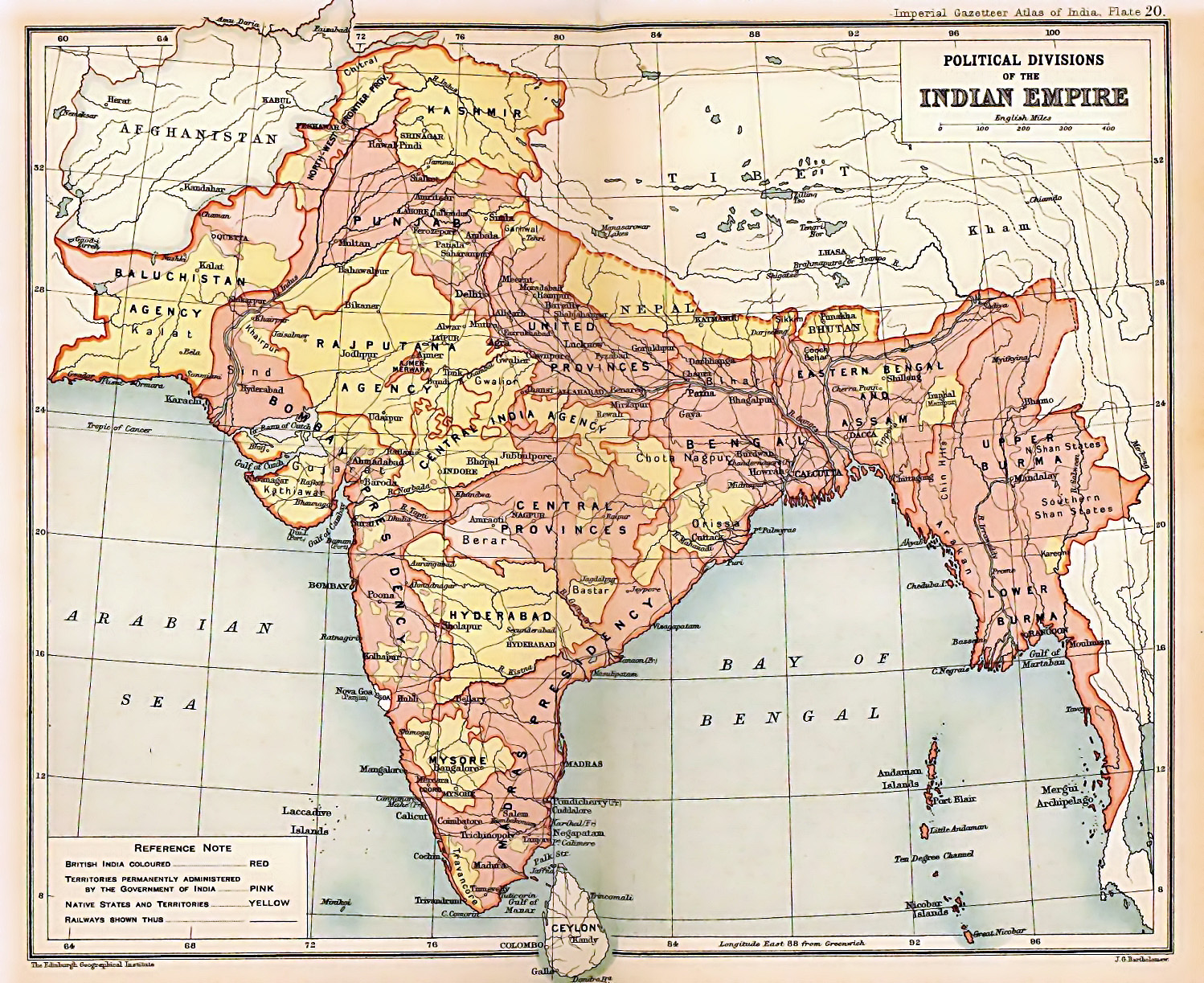
Political Map Of British India, 1909.

But numbers alone do not tell the story. Culturally, “India” was a collection of various small states and territories populated by a variety of ethnic and racial groups following a variety of religions and  speaking many different languages. British India was the centerpiece of the British Empire and the effects of that relationship are still felt to this day and especially in the areas of food and fashion. However, during the period of British rule, the relationship between Indian and Britain was a complex one and had both positive and negative aspects. While the British were more than happy to make money trading for various Indian products, they were less enthusiastic about cross-cultural contacts.

c.1890's PHOTO INDIA TAJ MAHAL AGRA

Taj Mahal, Agra, c. 1890s

Basically, British racial attitudes of the time conditioned the relationship between ruler and ruled and this meant that while they ruled India, they did so in a distant manner, taking measures to maintain a distance, both culturally, socially, and even physically on occasion. These racial attitudes became especially hardened in the wake of the Sepoy Mutiny in 1857 – 1858 (or First War of Independence as it’s referred to in India) and the British ruled with the attitude they were were essential to India- without them the country would dissolve into anarchy that many characterized as a “bloodbath.”

Culturally, this cultural and social distance was reflected in the manner of British settlement. Great efforts were made to recreate a slice of Britain and this was especially true in the case of Simla, a town located in the hills of northern India. The climate in Simla (referred to as Shimla today) was similar to that of England  and it was here in 1863 that the British decided to make it the summer capital of British India; twice yearly the entire government would move from Calcutta (Kolkata), over 1,000 miles away to escape the heat.
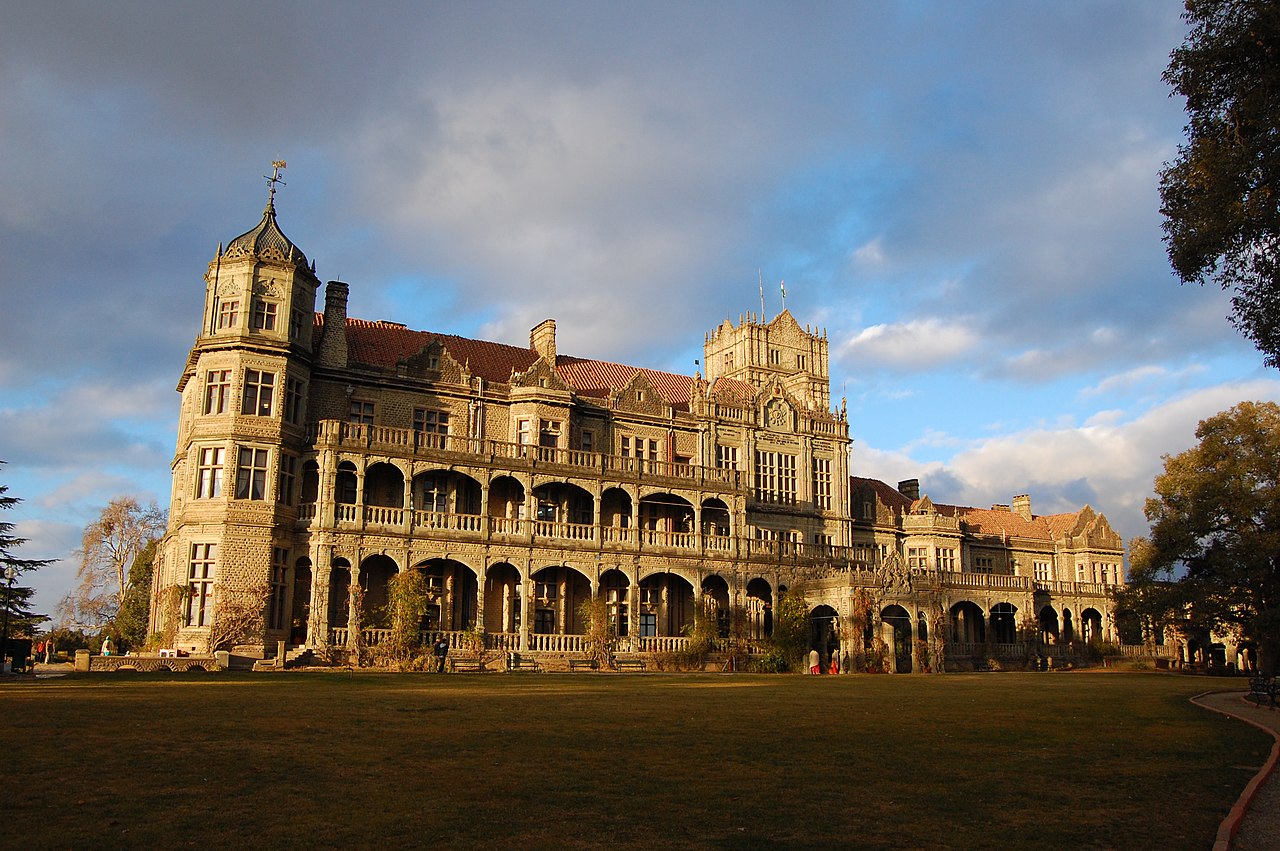
Viceregal Lodge, built in 1888. This was the summer residence of the Viceroy of India.

Viceregal Lodge, 1909

The Mall, Simla, c. 1880s

Turning to fashion during the Raj, here are a few views:

0dc0173d1357ac5296c43998f7dbdc7e

Judging by the sleeves on the women’s dresses, the above family picture appears to date from the early 1890s. This appears to be more of a formal portrait (except for the woman in the back who has an injured arm in a sling).

d0487d4a1fca1461c31a15c18af1ec10

The above picture appears to date from the 1890s and we see a light dress being worn by the woman on the left while a more full outfit is being worn by her companion.

Two British Women In Rickshaws - Ceylon (Sri Lanka) c1870's

The above picture also appears to date from the early 1890s. While it’s hard to arrive at any definite conclusions in regard to fabric or construction, it’s fair to say that the women’s outfits were probably lighter than what would be found at home in terms of fabrics. Interestingly enough, we see a variety of looks. On the right in the above picture, we see a shirtwaist/skirt combination being worn with her late 80’s flowerpot hat. The woman to the left is wearing a more fashionable 1890s gown.

696299449d402115899d536b5b5ec9f2

Couple and household servants.

The above picture is most likely from the early 1900s and here we see a shirtwaist/skirt combination.

1905_1

April, 1905

In the above picture we see the English mother in what appears to be a wrapper, a practical garment both for the climate and dealing with children. This would not be worn outside of the immediate household.

india_0001

in-india-rust

In the two above portraits, the subjects are unidentified but judging from the clothes, it appears that these two portraits were taken sometime in the late 1890s. These two women are fashionably dressed

What is interesting and not unexpected is that there does not appear to be any sort of a cultural crossover in terms of clothing, at least from Indian to British. This is an area that bears more study because it poses some interesting questions regarding the transfer of fashion between cultures. Compared to other places and times the social/cultural walls dividing ruler from ruled were high.

Some insight can be found by considering the nature of the Raj itself. Unlike more traditional empires, the Raj was not the result of an organized process of military conquest but rather a series of disjointed actions that occurred over a hundred years. Initially, the British came to trade in the guise of the East India Company. However, at the time they first arrived, there was a growing political vacuum as a result of the decline of the Mughal Empire during the 18th Century and gradually the British acquired increasing political power as they sought to reinforce their economic position.

The British were well aware that due to inferior numbers, they could not rule solely through military force, but rather they used a combination of political manipulation, economic power, and selective military action. As part of this, there was the idea of prestige, maintaining a superior position based on the idea of belonging to a superior race. As part of this process of maintaining prestige, women were viewed as an essential element and not only were they expected to be good wives and mothers, they were expected to personify all those traits that made the British a superior race. This also meant that wherever the British resided in India, it would be a transplanted piece of Great Britain (as much as possible) and this was reflected in places such as Simla.

And naturally, as fashion reflects society and culture, it followed that fashion worn by the British in India would replicate what was worn back home although the materials used were no doubt lighter and more suited to the warmer climate found in India. Also, many Indians connected with the Raj began to adopt Western dress.

The above is just a cursory, extremely simplified view of the Raj and there is naturally a lot more to it. However, what is striking to the casual viewed is that for the most part, the British in India existed in their own world, mostly apart from the Indians and interaction was severely limited except for a few “proper” channels, a situation that largely remained unchanged until 1948 when Indian and Pakistan became independent nations. However, it must be noted that the social situation was a lot more fluid in the early days during the 17th and 19th Centuries and the 1920s and 1930s.

rider-in-india

The Raj is long gone now and the world has moved on. We look upon the past with its riches in fascination but at the same time we know that there were aspects that are best left behind. However, at the same time, there is much that is worthwhile and for us, that serves as a driving force for what we do.

Sarah Bernhardt – A Different Look…Maybe…

On of the most famous actresses of the 19th Century was Sarah Bernhardt. Her career spanned the years from 1862 through 1922 and she performed both in Europe and America.

Sarah_Bernhardt(1844-1923)

Sarah_Bernhardt_as_Cleopatra_1891

Sarah Bernhardt as Cleopatra, 1891.

As with other major celebrities of the day, she lived a good part of her life in the public eye and people took note of what she wore both on and off stage. Designers made it a point to design clothes for actresses as a means of promoting their work and Sarah Bernhardt was no exception- Jacques Doucet and Paul Poiret designed various outfits for her.

But sometimes there are images that simply make one wonder. Below are two images from the Library of Congress that are allegedly of her:

Sarah Bernhardt2

Sarah Bernhardt (alleged) as the “Ocean Empress,” c. 1880Library of Congress.

Above is a portrait of Sarah Bernhardt, supposedly, in a diving suit entitled “The Ocean Empress”. Below is another portrait from what appears to be the same event:

Sarah Bernhardt1

Sarah Bernhardt (alleged) with unknown person, c. 1880 Library of Congress.

No doubt they were probably some sort of promotional pictures of some sort but beyond that we know little, at least in English. A curiosity, to be sure! And no, we are going to start making diving suits. 😉

Pleating – Old School Style

Ruffles2

Here I am hard at work in the Atelier working on one of many projects, in this case a wedding dress. In the above picture I am sewing a long strip of pleating onto the skirt base. It’s definitely old school, helped along by one of my many vintage sewing machines- their weight and strength ensure that there is no “drift” when sewing and everything goes on the right way the first time around.

When the project is completed, I’ll have some more pictures to show so stay tuned… 🙂

Bringing A Nation Together – Fashion And The American West

…Tombstone becomes queen of the boom towns where the latest Paris fashions are sold from the backs of wagons…

The above quote is from the opening narration to the movie Tombstone and while it might have been an exaggeration, it raises an interesting question in regard to how current fashion was in the American West.

Fashion, loosely defined, is a style that is accepted and used by the majority of a group at any one time, no matter how small that group. As applied to women’s fashions of the 1870s and 1880s, one could easily argue that the bustled dress was a major fashion that underwent a series of evolutions during this period. For men, the same thing could be said about the sack suit and there is a  large body of documentation to support this ranging from photographs, magazines, illustrations, and, most significantly, paper sewing patterns.

As it relates to the American West, the short answer is that by the 1870s, people in the West were pretty well informed about events in the rest of the nation (and the world) this also to fashion. The longer answer is that the dissemination of information was dependent on the speed of communications. People living closer to railroads were more well informed than those farther away and a lot depended on where the railroad was located. With the railroad came a more certain delivery of mail and that meant the shipment of books, magazines, catalogs, and ultimately merchandise.

People are often under the impression, no doubt spurred along by film and television, that it took months, if not years, for mail to reach people and that fashion styles ran at least five to ten years behind those in the East (sometimes referred to as “The States”). This might have been the case before the American Civil War but with the end of the war, railroad construction rapidly expanded from 1865 through 1873. With the completion of the first transcontinental railroad in 1869, the United States was brought closer together and along with it an increase in freight and passenger volume.

In terms of fashion, the 19th Century saw the growth of various mass-market publications such as with Godey’s Lady’s Book (1830 – 1878), Demorest’s (which published under a variety of names from 1860 through 1899), Peterson’s Magazine (1842 – 1898), and The Delineator (1869 – 1937). Fashion news, along with fashion plates, advice columns, and patterns, made up a good part of each of these publications and often reflected the latest styles from Paris. While it could be argued that much of the information may have been of limited utility to those out in the west, especially in more isolated areas, the fact that such information was published signify that there was interest. Moreover, all of these publications contained practical information deliberately aimed at the home sewer.

Closely related to the publications was the development of printed paper sewing patterns. In fact, Demorest’s Magazine originally started in 1860 as a catalog for marketing a line of printed paper sewing patterns developed from the 1850s on by Ellen Louise Demorest.  One of her accomplishments was devising a mathematical system for sizing patterns up or down. Another major innovator was Ebenezer Butterick who in 1863 started selling tissue paper sewing patterns that were graded in multiple sizes. As in the case of Demorest’s, Butterick started publishing The Delineator as a vehicle for promoting his patterns.


By the late 1890s, the ready-made pattern industry was a thriving multi-million dollar industry in the United States and patterns were available in retail locations as well as by mail order.

From The National Garment Cutter Book Of Diagrams

With the growing availability of fashion information throughout the nation, people were able to stay abreast of fashion in a timely manner (often just a matter of weeks). Combined with the mass production of sewing machines, the home sewer was well positioned to take advantage of this proliferation of fashion information. If people were not able to precisely imitate the latest Paris fashions, they at least were aware of them and often imitated them to the best of their abilities and resources.

One small demonstration of this spread of fashion information can be seen in this picture taken in the town of Kingston, New Mexico in the late 1880s:

 S14KONICAC715102316400_0001

Here we see women dressed consistent to the 1880s. The dresses are fairly plain except for the woman seated in front of the dress making shop- it’s presumed that she is the proprietress. Interestingly enough, Kingston was founded in August 1882 when silver was discovered in the area. Soon there were a number of mines in operation and Kingston thrived as a boom town. In many respects, Kingston was similar to Tombstone in that both were boom towns at roughly the same time (Tombstone started a few years before) and here we see that while fashion may have been a bit more subdued than back east, it was still fairly up to date.

While admittedly this is only a small sample, it still demonstrates that contrary to popular belief, the American West was not “years” behind the rest of the nation nor the world in terms of fashions, or at least fashion information. Combined with the growth of mass market publications and printed sewing patterns, now any home sewer could participate in fashion.

Magnificent Seven Convention Highlights

wpid-20151024_133135.jpg

Outside the meeting room at the LA Convention Center.

It was a good day for us at the Magnificent Seven Convention– our presentation “The Victorian West: How the West Was Worn” appeared to have been well received and we feel good. The audience was amazing and had many good questions- it was a real back and forth discussion. We even had people who had traveled all the way from Indonesia- amazing! 🙂 We have been flogging this event for the past month in our blog in anticipation but we always get excited before giving a presentation. Giving public presentations always excites us because it gives us an opportunity to physically interact with our public, talk about the historical basis for our creations, and gather new ideas for future designs.

So, why are we doing this? Well, first and foremost, it’s about the history- history is the basis for what we do and it has always been a passion for us. It was a deep interest in history that initially got us into this business, and it informs everything we do. It’s proven to be a continual learning process; one is always learning new things and anyone who says that they “know it all” is either lying or simply ignorant. New facts are constantly emerging that challenge our ideals and perceptions and we have changed along with it.

Adam_Karin1

At the convention hall.

Unfortunately, over the years we have also witnessed a lot of misinformation and mythology that has been stated as historical fact. We have witnessed some pretty incredible claims that are truly cringeworthy (or simply amusing after a few drinks). While we may wish to clear up the misinformation out there, we are also realize that it’s a near-impossible task so what we attempt to do is to encourage people to question and gather information on their own from reliable sources; it’s often easier than one would think and with the development of the internet over the past 30 years, it’s never been easier.

Karin7

And just because…at home after the convention.

At the same time, we are also motivated by our experiences creating costumes for the entertainment industry. Often we are asked: “Why are those costumes not historically accurate in the movie XYZ?” In response, we usually say that costumes are intended to help advance the story and enhance the characters. While this may seem to be a cop-out, it really isn’t. Often, what looks good to the naked eye looks absolutely horrible on film; lenses and film react to colors differently under different types of light and adjustments may need to be made so that a costume looks better on film. Also, historical accuracy may be sacrificed, or at least reduced, due to budgetary and time constraints, changes in scripts and actors, or simply because the director thinks that something that’s not historically accurate looks better.

While one could easily spend their time criticizing the costumes in various films on the basis that they lack historical accuracy, in the end this is self-defeating and accomplishes nothing. In the end, film and television productions are about making money and doing whatever it takes to achieve that end. To put it more bluntly, we’re being paid to do a job and the director is the boss so we ultimately have to follow their wishes. In the end, if you want historical accuracy, read a book or watch a documentary (although that’s often no guarantee of historical accuracy).

But don’t get us wrong, we have a deep love for historical accuracy and it does gall us to no end when some things are done wrong but ultimately, all we can do is hold our noses and move on. However, if you ask us what we think, we will not lie either.

So, in our presentation, we present an historical overview of the history of costume in the West during the late 19th Century and combine it with comparing and contrasting costume as seen in film and television versus what actually existed, using our private museum collection of clothing, both original antiques and B-Western. In assembling the presentation, we systematically examined a lot of original photographs and illustrations and consulted a number of primary and secondary sources and we have to admit that the process was very instructive. We believe that we achieved our goal but we now want to expand upon it so we will be doing further research and incorporating it into future presentations.

Adam3

Modeling the vest and trousers from my new suit.

It’s our sincerest hope that we have provided some good information for people to take away with them and serve as a springboard for expanding their own knowledge.

In closing, we would like to thank the Magnificent Seven Convention and it’s entire staff for inviting us to come and speak and providing a wonderful experience. The facilities were top-notch and our requirements were provided for in a timely manner. We look forward to returning in the future.