Eton Jacket Project No. 2 – Part 1

Another Eaton jacket in the works…I’m incorporating more tailoring techniques in this one so we’ll see how it turns out. 🙂

Laying out some of the fashion fabric. The lighting is really poor- the fabric is actually a teal linen.

Chalking out the pieces- The pattern pieces are actually slopers so I have to manually add the seam allowance which in this case is 1/2 inch.

Creating the canvases for the front left and right.

To be continued…


Out And About- The Getty Villa

Yesterday, we decided to take a break and visit the newly-reopened Getty Villa for a little aesthetic inspiration and mental re-energizing. The isolation because of COVID has been especially strong here in Southern California and we’ve been feeling it. Fortunately, things are beginning to open up again so we took advantage. Here’s a few pictures from our excursion, enjoy! 🙂


Looking Back- Craigdarroch Castle

It’s been over two years since we visited Victoria, British Columbia and the memories still linger on- it’s definitely one of those places we intend to one day revisit. Craigdarroch Castle was simply amazing and it’s a lot larger on the inside than one would suspect. If you’re up in that part of the world, it’s worth a visit- you’ll be amazed but prepare to do some walking (though it’s not as bad as Neuschwanstein!).


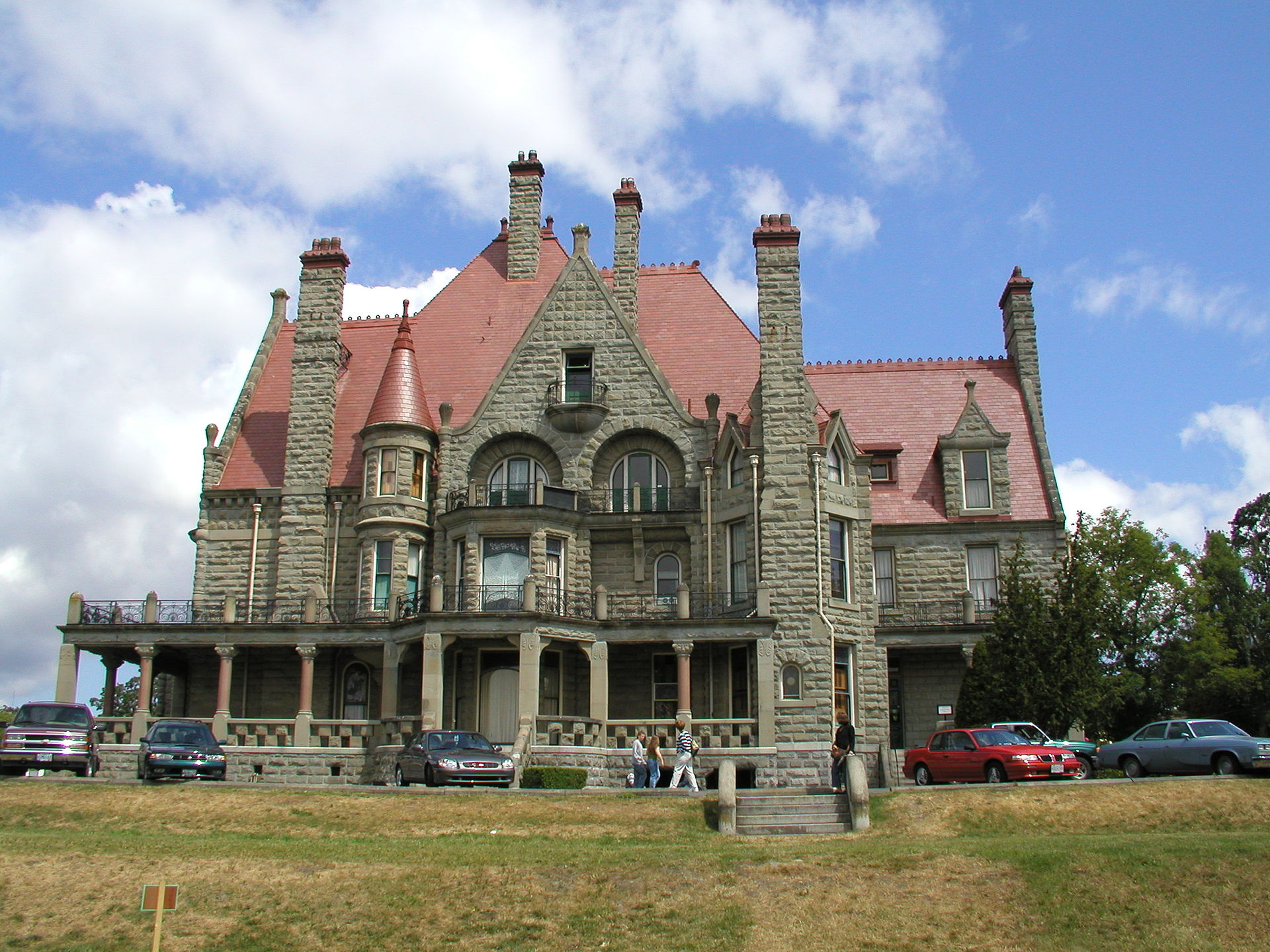
After a brief tea refreshment, we drove back to Victoria to pay a visit to Craigdarroch Castle. Nicknamed today as “Canada’s Castle,” Craigdarroch Castle was built in 1887-90 by the Robert Dunsmuir, a man who made his fortune from coal and railroads. Like many houses built by the nouveau riche of the late 19th Century, to expense was spared and it was built large, originally on a 28-acre estate (although most of the surrounding land was later sold off). For us, it was a fascinating peek into a world mostly only seen in pictures and the sheer massiveness of the house impressed us- one just doesn’t get an idea of the sheer size until they actually experience it in person. 🙂 Here’s few views of the exterior:

20181006_135827.jpg

20181006_135719.jpg

There was renovation going on so I wasn’t able to get the best pictures so here’s one from Wikipedia to help out:
Craigdarroch.jpg

And now for the interior…

20181006_130356.jpg

The central staircase- there are four floors and a lot of steps…

20181006_130750.jpg

Part of the entrance hallway.

20181006_130952.jpg

Front Parlor

One of the most interesting things we learned was that in restoring the house, great efforts were made to track down the original furnishings and various other artifacts though auction catalogs and the like- after the death of the Joan Dunsmuir in 1908, the house and its contents were dispersed in a number of sales since none of the heirs lacked the means to buy the others out. Also, ironically enough, Robert Dunsmuir died in 1889 before he could occupy his new house. Moving along, here are some more views:

20181006_130905.jpg

20181006_131142.jpg

One of the hallways…

By now, you probably might have noticed that there were a number of garments on display. Unfortunately there were no signs or anything else that gave any information so it’s hard to know if these were original to the house or merely generic placeholders. But here they are:

20181006_131106.jpg

This one is definitely late 1890s, especially with the relatively narrow sleeve caps.

20181006_131113.jpg

Here’s a good view of the side profile.

20181006_131745.jpg

The chatelaine is amazing.

20181006_130915.jpg

This one was a bit far away to be able to view properly but it appears to be more of a late 1890s or very early 1900s.

20181006_133303.jpg

20181006_133814.jpg

Fairly generic ball gown/evening dress. The staging wasn’t the most optimal.

And for a something Chinese…we’re not sure how that fit in but OK. 🙂

20181006_133512.jpg

We’re not sure where this fit in but it was fascinating to look at.

Here are some more views of various rooms:

20181006_133427.jpg

One of the bedrooms.

20181006_133238.jpg

The billiard room.

20181006_131631.jpg

20181006_134832.jpg

Early sewing machine.

The ballroom was closed due to issues with the soundness of the floor but there were a number of dance cards:  🙂

20181006_133921.jpg

20181006_133938.jpg

Overall, it was a wonderful experience and we highly recommend it for anyone visiting Victoria.


Designs From Maison Worth

charles-frederick-worth-english-fashion-designer-active-in-paris

The Master Himself

Today we take you across the ocean to Paris, the capital of fashion in the late 19th Century for a brief look at one (of many) creation by Frederick Charles Worth. Worth was one of the first “name” fashion designers who pioneered what ultimately was to become the Haute Couture system that ruled the fashion world for almost a century.

Along with creating his own dress designs, Worth also commissioned his own custom fabrics and in particular he patronized the French silk industry centered in Lyon1Unfortunately, the silk industry in Lyon has diminished since the late 19th Century and today, Prelle et Cie is one of the few silk weavers that remain. Prelle’s silks have been used to restore a wide variety of historic sites worldwide and they even recreated many of the silk fabrics used in 2006 film Marie Antoinette.. One such creation that Worth commissioned from the firm of Morel, Poeckès & Paumlin in 1889 was the Tulipes Hollandaises (“Holland Tulips). The design was intended to push the silk weaver’s art to its limits, the design has a three-foot repeat in the pattern which made it difficult to weave.

Below are two pictures of the textile’s design:

Worth Evening Cape 1889_3

Worth Evening Cape 1889_4

The tulips are depicted in bright colors set against a black background and some commentators have characterized it as an “aggressive” design intended to make a bold statement, especially given the size of the design repeat.

As part of the 1889 Exposition Universelle in Paris, the products of French industry were exhibited and naturally the textile and couture industries were part of it. The above textile was put on display and it ultimately was awarded a grand prize.

Paris_1889_plakatThe above fabric was ultimately made into an evening cape that was designed to show off the tulip design to its maximum advantage:

Worth_Evening Cape 1889_1

Front View- Evening Cape, House of Worth, 1889; Metropolitan Museum of Art (2009.300.1708)

Worth_Evening Cape 1889_2

Rear View- Evening Cape, House of Worth, 1889; Metropolitan Museum of Art (2009.300.1708)

Worth_Evening Cape 1889_5

Here’s a view that’s a bit less sterile than what is normally encountered in a museum setting.

The above evening cape shows off the silk textile to its maximum advantage. Some could argue that it’s excessive and perhaps even gauche but that was the nature of Haute Couture in the late 19th Century and given the spirit of the time, anything less would have been dismissed as banal. Less was definitely not more during the Belle Epoch. 🙂


More 1880s Style…

Fashions of the 1880s have always been a source of fashion inspiration for us and we’re constantly in search of interesting examples. We recently came across this example of a dress done in a pseudo-waistcoat and jacket style that utilizes horizontal and vertical stripes in harmonious manner. The pictures were obtained off the net and might have been on an vintage clothing auction website at one time but it’s a bit ambiguous; thus, nothing was obtainable on its provenance.1For reasons unknown, the copy associated with the dress is for a completely different dress and the confusion has been perpetuated by endless copying from one Pinterest board to another. Usually we can work out the original source of the pictures but this one completely eludes us at this time.

The dress appears to be constructed from a solid ivory-colored material combined with a medium old gold/brown and black pin-striped material. The front of the skirt combines broad horizontal ivory-colored knife-peated stripes with narrow black and old gold/brown vertical stripes.  Below is a close-up of the bodice where we can see that it buttons up the front.

Here’s a better view of the striped fashion fabric and cuff. The black stripes could maybe be a black velvet on a base of old gold/brown-colored fabric, perhaps a corded silk faille. The cuff is finished with two separate layers of gold and dark brown silk satin. The cuff is then finished with a knife-pleated chiffon-like material.

Below is another close-up, this time of the rear skirting. One can see that the stripes have been carefully lined on on the seams.

And side and rear profile views:

The train is interesting in that it’s in the solid ivory fashion fabric and trimmed in gold and brown silk satin. This provides a somewhat stark contrast with the striped fashion fabric. The dress silhouette reads mid to late 1880s although the lack of proper undergarments makes for a somewhat limp rear silhouette- there would be a bit more of a train. The photo below gives a better view of the train:

This is a great example of mid to late 1880s style and we really wish that there had been background information about this. However, we can make some educated guesses in regard to style, silhouette, and materials. If, and when, we find out more, we shall up this so in the meantime, enjoy the pictures! 🙂