Lily Absinthe- Worldwide, All The Time! :-)

Flag_of_the_Faroe_Islands

Flag of the Faroe Islands

One of the interesting things about having a blog on WordPress is that you can see what parts of the world that your readers are from (or at those who just wander in). While we would expect most of the hits to be from those in the United States, we still get a fair percentage from Great Britain, Germany, France, Australia, Russia, India, and other places. Sometimes the map reads like old British Empire- imagine that. 🙂

But one of the most interesting set of hits comes from the Faroe Islands. Faroe Islands? Yes, the Faroe Islands. 🙂 Most people have probably never heard of them; I’m familiar with them from the Cold War era when it sat right in front of the Greenland Iceland United Kingdom (GIUK) Gap– the only outlet available for any Soviet Naval movement in to the Atlantic. It was anticipated that in event of war, this would be heavily fought over as the Soviet Northern Fleet, based in Kola Peninsula, would seek to break out into the Atlantic and disrupt the NATO supply lines from North America to Europe (The book Red Storm Rising by Tom Clancy is set here). OK, enough Cold War history- we’re not quite ready to get into Cold War Era fashions…yet. 🙂

Porkeri.Suðuroy.1

The southernmost island of Suðuroy. Photo by Erik Christensen.

Located north of Scotland, the Faroe Islands lies between the Norwegian Sea and Atlantic, almost equidistant from Iceland and Norway:

Faroe_Islands_in_its_region

Here is a very rough map of the where the Faroe Islands are located.

With the end of the Cold War, things are bit more calm in the region. Today, the Faroe Islands exists as a semi-autonomous part of the Denmark (although that may change in the future- there’s a strong active independence movement).

We are flattered that anyone in such a remote place would be reading our blog and we will continue to provide interesting content in the future. 🙂

Lily Absinthe Takes A Look At India During The British Raj

With the recent series Indian Summers on Masterpiece, our thoughts have turned towards the subcontinent of India and in particular that period of British rule commonly referred to as the British Raj or just Raj. In particular, we have been exploring the relationship between India and fashion during the  late 19th and early 20th Centuries. Composed of the present-day nations of India, Pakistan, and Bangladesh (and some other areas such as Oman and Sri Lanka at various times), British India was enormous in comparison with the United Kingdom itself: India had a land mass of approximately 1,893,179 square miles and a population of approximately 225 million (according to the first census taken in 1881). In comparison, the United Kingdom had a land mass of 120,832 square miles and a population of approximately 35 million (including Ireland).
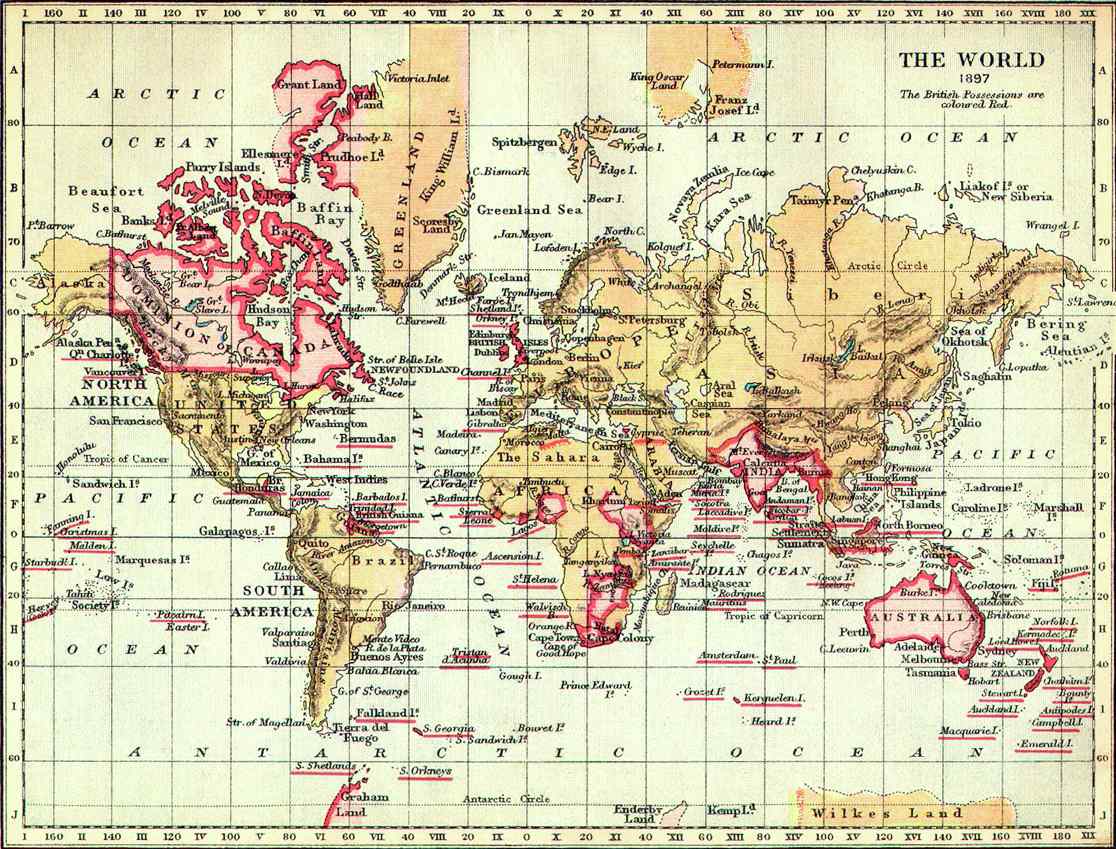
Map of the British Empire, 1897.
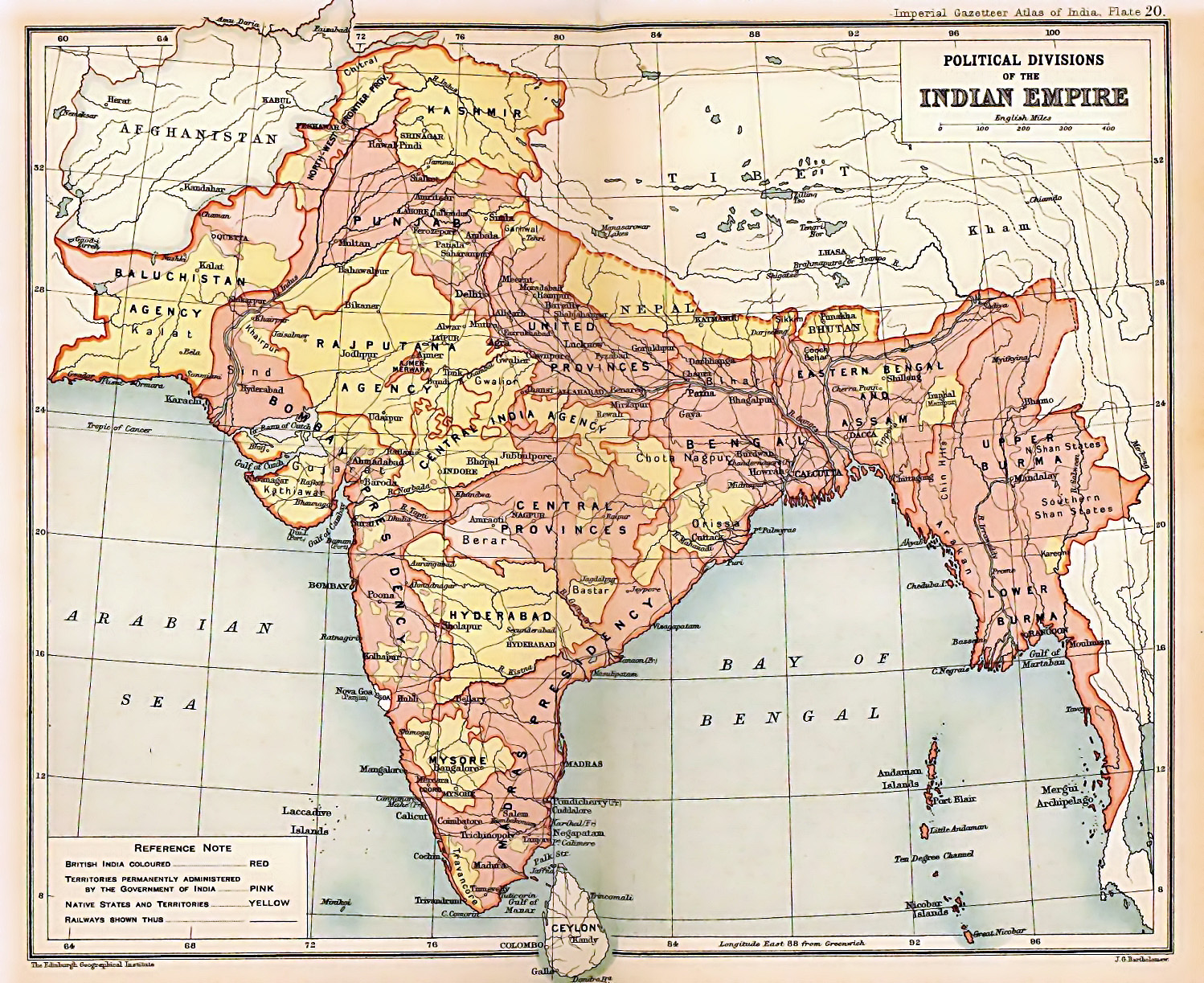
Political Map Of British India, 1909.

But numbers alone do not tell the story. Culturally, “India” was a collection of various small states and territories populated by a variety of ethnic and racial groups following a variety of religions and  speaking many different languages. British India was the centerpiece of the British Empire and the effects of that relationship are still felt to this day and especially in the areas of food and fashion. However, during the period of British rule, the relationship between Indian and Britain was a complex one and had both positive and negative aspects. While the British were more than happy to make money trading for various Indian products, they were less enthusiastic about cross-cultural contacts.

c.1890's PHOTO INDIA TAJ MAHAL AGRA

Taj Mahal, Agra, c. 1890s

Basically, British racial attitudes of the time conditioned the relationship between ruler and ruled and this meant that while they ruled India, they did so in a distant manner, taking measures to maintain a distance, both culturally, socially, and even physically on occasion. These racial attitudes became especially hardened in the wake of the Sepoy Mutiny in 1857 – 1858 (or First War of Independence as it’s referred to in India) and the British ruled with the attitude they were were essential to India- without them the country would dissolve into anarchy that many characterized as a “bloodbath.”

Culturally, this cultural and social distance was reflected in the manner of British settlement. Great efforts were made to recreate a slice of Britain and this was especially true in the case of Simla, a town located in the hills of northern India. The climate in Simla (referred to as Shimla today) was similar to that of England  and it was here in 1863 that the British decided to make it the summer capital of British India; twice yearly the entire government would move from Calcutta (Kolkata), over 1,000 miles away to escape the heat.
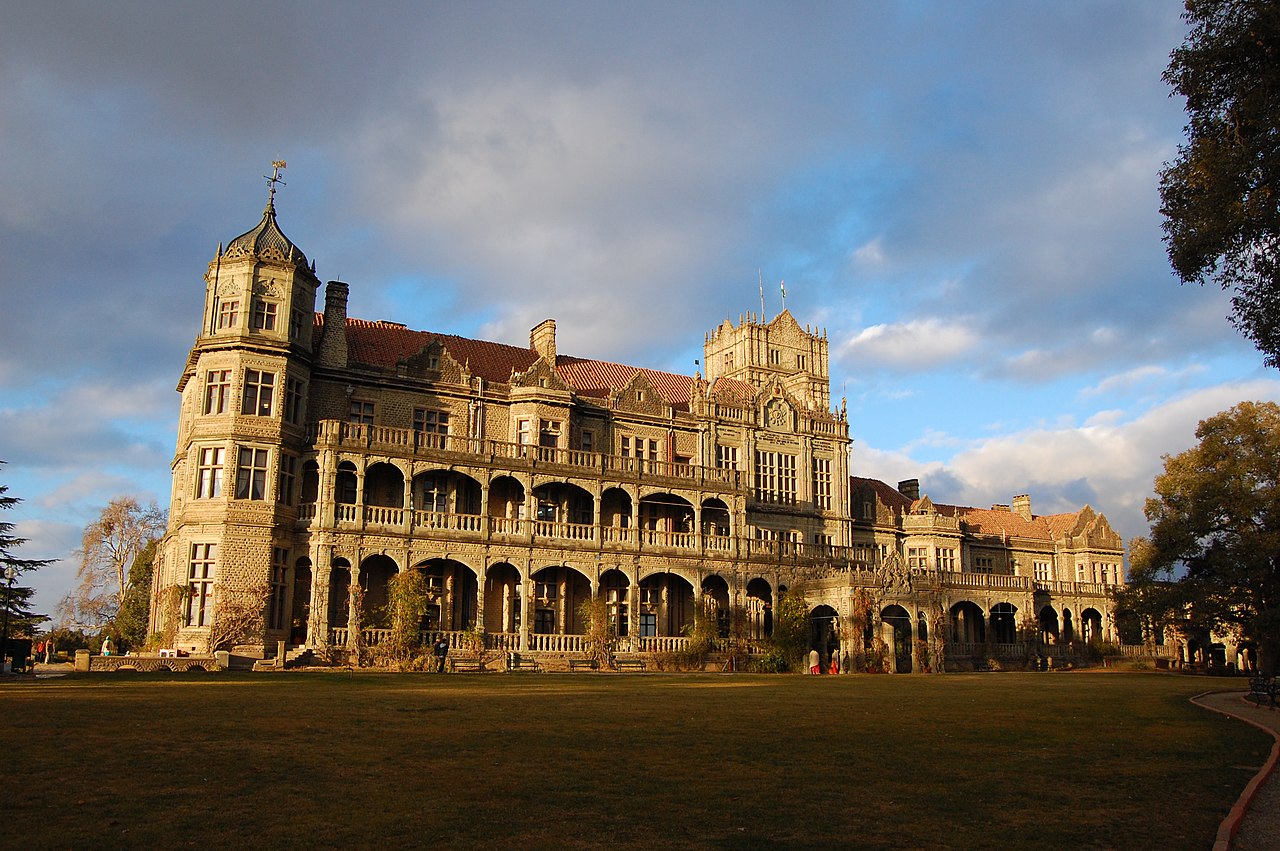
Viceregal Lodge, built in 1888. This was the summer residence of the Viceroy of India.

Viceregal Lodge, 1909

The Mall, Simla, c. 1880s

Turning to fashion during the Raj, here are a few views:

0dc0173d1357ac5296c43998f7dbdc7e

Judging by the sleeves on the women’s dresses, the above family picture appears to date from the early 1890s. This appears to be more of a formal portrait (except for the woman in the back who has an injured arm in a sling).

d0487d4a1fca1461c31a15c18af1ec10

The above picture appears to date from the 1890s and we see a light dress being worn by the woman on the left while a more full outfit is being worn by her companion.

Two British Women In Rickshaws - Ceylon (Sri Lanka) c1870's

The above picture also appears to date from the early 1890s. While it’s hard to arrive at any definite conclusions in regard to fabric or construction, it’s fair to say that the women’s outfits were probably lighter than what would be found at home in terms of fabrics. Interestingly enough, we see a variety of looks. On the right in the above picture, we see a shirtwaist/skirt combination being worn with her late 80’s flowerpot hat. The woman to the left is wearing a more fashionable 1890s gown.

696299449d402115899d536b5b5ec9f2

Couple and household servants.

The above picture is most likely from the early 1900s and here we see a shirtwaist/skirt combination.

1905_1

April, 1905

In the above picture we see the English mother in what appears to be a wrapper, a practical garment both for the climate and dealing with children. This would not be worn outside of the immediate household.

india_0001

in-india-rust

In the two above portraits, the subjects are unidentified but judging from the clothes, it appears that these two portraits were taken sometime in the late 1890s. These two women are fashionably dressed

What is interesting and not unexpected is that there does not appear to be any sort of a cultural crossover in terms of clothing, at least from Indian to British. This is an area that bears more study because it poses some interesting questions regarding the transfer of fashion between cultures. Compared to other places and times the social/cultural walls dividing ruler from ruled were high.

Some insight can be found by considering the nature of the Raj itself. Unlike more traditional empires, the Raj was not the result of an organized process of military conquest but rather a series of disjointed actions that occurred over a hundred years. Initially, the British came to trade in the guise of the East India Company. However, at the time they first arrived, there was a growing political vacuum as a result of the decline of the Mughal Empire during the 18th Century and gradually the British acquired increasing political power as they sought to reinforce their economic position.

The British were well aware that due to inferior numbers, they could not rule solely through military force, but rather they used a combination of political manipulation, economic power, and selective military action. As part of this, there was the idea of prestige, maintaining a superior position based on the idea of belonging to a superior race. As part of this process of maintaining prestige, women were viewed as an essential element and not only were they expected to be good wives and mothers, they were expected to personify all those traits that made the British a superior race. This also meant that wherever the British resided in India, it would be a transplanted piece of Great Britain (as much as possible) and this was reflected in places such as Simla.

And naturally, as fashion reflects society and culture, it followed that fashion worn by the British in India would replicate what was worn back home although the materials used were no doubt lighter and more suited to the warmer climate found in India. Also, many Indians connected with the Raj began to adopt Western dress.

The above is just a cursory, extremely simplified view of the Raj and there is naturally a lot more to it. However, what is striking to the casual viewed is that for the most part, the British in India existed in their own world, mostly apart from the Indians and interaction was severely limited except for a few “proper” channels, a situation that largely remained unchanged until 1948 when Indian and Pakistan became independent nations. However, it must be noted that the social situation was a lot more fluid in the early days during the 17th and 19th Centuries and the 1920s and 1930s.

rider-in-india

The Raj is long gone now and the world has moved on. We look upon the past with its riches in fascination but at the same time we know that there were aspects that are best left behind. However, at the same time, there is much that is worthwhile and for us, that serves as a driving force for what we do.

Sarah Bernhardt – A Different Look…Maybe…

On of the most famous actresses of the 19th Century was Sarah Bernhardt. Her career spanned the years from 1862 through 1922 and she performed both in Europe and America.

Sarah_Bernhardt(1844-1923)

Sarah_Bernhardt_as_Cleopatra_1891

Sarah Bernhardt as Cleopatra, 1891.

As with other major celebrities of the day, she lived a good part of her life in the public eye and people took note of what she wore both on and off stage. Designers made it a point to design clothes for actresses as a means of promoting their work and Sarah Bernhardt was no exception- Jacques Doucet and Paul Poiret designed various outfits for her.

But sometimes there are images that simply make one wonder. Below are two images from the Library of Congress that are allegedly of her:

Sarah Bernhardt2

Sarah Bernhardt (alleged) as the “Ocean Empress,” c. 1880Library of Congress.

Above is a portrait of Sarah Bernhardt, supposedly, in a diving suit entitled “The Ocean Empress”. Below is another portrait from what appears to be the same event:

Sarah Bernhardt1

Sarah Bernhardt (alleged) with unknown person, c. 1880 Library of Congress.

No doubt they were probably some sort of promotional pictures of some sort but beyond that we know little, at least in English. A curiosity, to be sure! And no, we are going to start making diving suits. 😉

Happy Halloween!

We want to wish everyone a happy Halloween out there!

Fall has finally made it’s appearance, albeit California style, and with it comes Halloween. Victorians were fascinated by the supernatural and the occult and they even dressed up for the occasion. Here are a few examples:

Halloween-Sexy-Witches-Vintage-CLip-Art

halloween-postcard

Sometimes Halloween cards seemed to take on a romantic theme that would seem more appropriate for Valentine’s Day:

HalloweenRomance1

halloween-postcard-vintage-32475122-323-500

And of course, we couldn’t let the day pass by without something fashion-related:

Halloween1

And even if it was a costume, a proper corset was an essential requirement. 🙂

Beauty Advice 1870s Style…

Feminine beauty has been a hot topic for discussion throughout recorded history and the 19th Century was no exception. With the growth of mass market publications and inexpensive books during the 19th Century, so was the mass proliferation of self-help manuals dealing with the subject of how one can enhance their beauty. It has often been stated by commentators that the growth of the health and beauty aids industry grew along with the fashion industry and that both were part of the overall consumer economy that began to take shape as part of the Industrial Revolution and it fed on people’s desire to improve their appearance, or at least how others perceived their appearance.

The Ugly Girl Papers_Cover

One such example of these self-help manuals was one titled, somewhat bluntly, The Ugly-Girl Papers or, Hints For The Toilet. Published by Harper’s Bazar in 1874, the book is a compendium of various beauty advice articles originally printed in various issues of Harper’s Bazar. Covering everything from proper posture and diet to keeping the skin soft, the book offers a variety of advice ranging from the merely amusing to the extremely questionable (and especially those involving various toxic chemicals). However, in the book’s defense, there are some things that are still used to this day, albeit in a modified form.

Particular ideas and attitudes in regard to fashion and beauty reflect their times and the 19th Century was no different. Contained in the preface of the book is some of the basic philosophy behind the book:

The first requisite in a woman toward pleasing others is that she should be pleased with herself. In no other way can she attain that self-poise, that satisfaction, which leaves her at liberty to devote herself successfully to
others.

I appeal to the ugly sisterhood to know if this is not so. Could a woman be made to believe herself beautiful, it would go far toward making her so. Those hopeless, shrinking souls, alive with devotion and imagination, with hearts as fit to make passionate and worshiped lovers, or steadfast and inspiring heroines, as the fairest Venus of the sex, need not for an instant believe there is no alleviation for their case, no chance of making face and
figure more attractive and truer exponents of the spirit within.

There is scarcely any thing in the history of women more touching than the homage paid to beauty by those who have it not…

The above passage pretty much sums up the reason why woman should be concerned with improving their beauty, and especially members of the “ugly sisterhood.”  In short, a woman’s ultimate fulfillment comes from her beauty and this book will help them attain it.

Needless, to say, the attitudes expressed above have changed somewhat but in some respects they still exist to this day although the language is different. The health and beauty aids industry is still with us today, stronger than ever, and its a multi-billion dollar industry that offers a seemingly endless variety of products and advice that carry the promise of enhancing out beauty (and yes, this also applies to men!).

So, in the end The Ugly-Girl Papers lives on as a testiment to another era, an historical artifact if you will. To us here at Lily Absinthe, while much of what we design is rooted in the 19th Century, our attitudes are not and we believe that every person arrives at true beauty by their own path, in their own time, and in their own way. 🙂